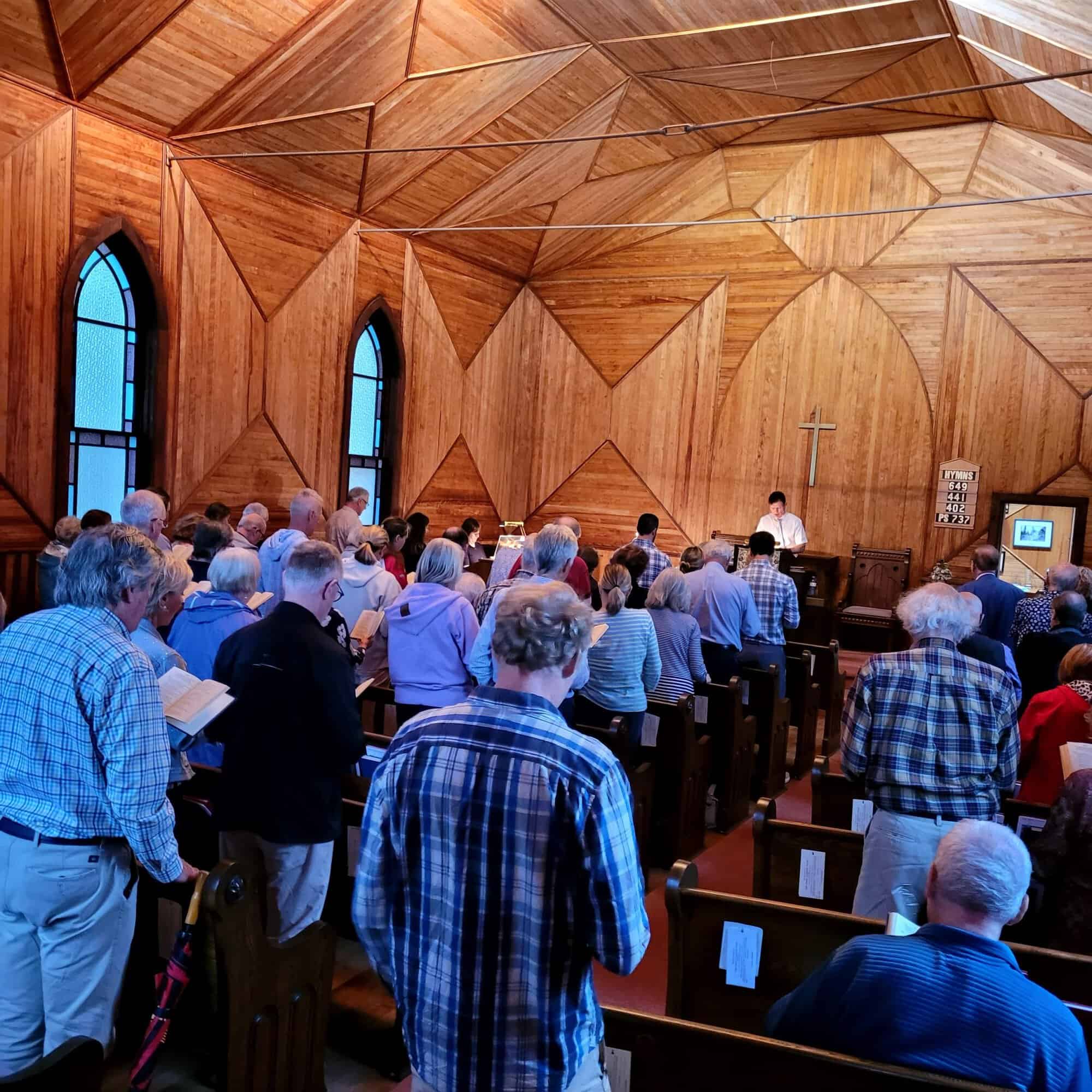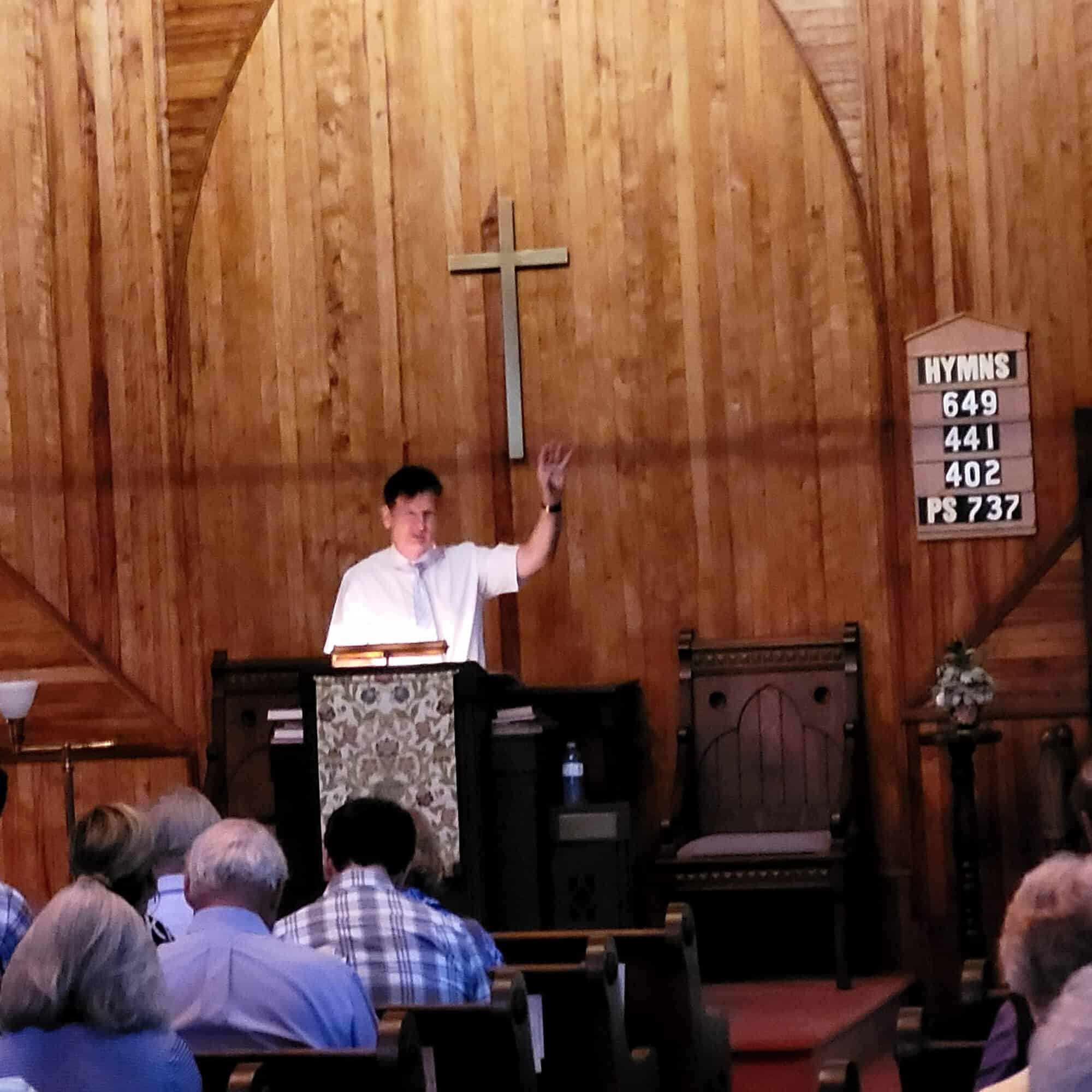
In “Leaving Home,” Rev. Hugh Reid reflects on the many ways people are compelled to leave what is familiar—through growing up, bereavement, aging, war, social upheaval, or joyful changes such as marriage and parenthood. Sometimes we leave home; at other times, change makes our former home unrecognizable. Drawing on the biblical stories of Abram and Matthew, Reid argues that both found the courage to abandon security because they trusted that their true home rested not in a particular place or way of life, but in their relationship with God.
Reid contrasts their faith with the resistance of those who cling to familiar divisions and false securities. Using Dolly Parton’s refusal to surrender half the publishing rights to “I Will Always Love You” as a modern illustration, he shows how prayerful courage and trust can lead to a larger good. His central message is that when life presents us with a “suitcase,” we should leave behind fear, prejudice, addiction, and other burdens, and instead “pack” faith in the risen Christ. Such faith does not weigh us down; it gives us the strength to move toward God’s promised future.
Sermon: Leaving Home
Texts: Genesis 1:1-9; Matthew 9:9-13
Gracious Holy Spirit, bless and shape the words I speak and the thoughts and feelings of those who hear that this might be a time when we discover our way home, in Jesus’ name, Amen.
The title of my sermon is “leaving home” and it puts me in mind of a story told by a friend of mine. He knew a person from a very large family, 8 or 9 children, and each child, on their eighteenth birthday, received the same gift – a suitcase.
Leaving home is something we all have to do…sometime…though that leave-taking takes different forms.
We often think of it as part of the normal course of growing up, a challenge that comes to us as young adults. I know many students are packing or will be packing suitcases in the coming days to go back to college or University. Some, for the first time are not going back to school but preparing to enter new careers.
But, in fact, it’s not just students who find themselves preparing for new and different lives. It is a challenge that faces us all our lives, a part of growing throughout our lives, a part of being mortal. I had a funeral last Thursday and the husband of the woman who died, now a widower, a good man, is returning to a home that isn’t home anymore. At the funeral reception was a young couple I had married ten years ago, they have a six-year-old going into grade one. She’s taking it very seriously and so are her parents. It’s a whole new stage in growing up.
You can expect these changes, but they can still take your breath away.
Then there’s the ones that come suddenly.
I saw this week a new two dollar coin has just been released by the Royal Canadian Mint celebrating the 100th anniversary of the Royal Canadian Legion. I think of the young men and women who had their lives disrupted by the first and second world wars, by Korea. They answered the call of their country, leaving home, going where they did not know, having to grow up very quickly. My father went to Burma where he modestly described his war record as being in hospital with various kinds of tropical diseases. Some of those young men and women left home and never returned, never had the chance to grow old at all, and their parents and families suddenly found their homes were not home anymore.
This speaks to the truth that sometimes it isn’t so much that you leave home as your home leaves you through the changes in our lives.
We threw an eightieth birthday party for my mother and part of the program was a little historical retrospective on her life. One couldn’t help but be touched by the changes. She was born in a farmhouse, that farmhouse is gone now along with the farm, replaced by “development.” We recalled evenings where friends and family would come to that farmhouse on a Saturday night to listen to the hockey games because they were one of the few families with a radio and the Leafs would be battling for the Cup. But we watch the games on a streaming service now, or Youtube, or others, and the Carolina Hurricanes beat Las Vegas for the Stanley Cup! My mother had married a wonderful man, but he had died and now she has died and that was 24 years ago and suddenly I’m a grandfather and I’d love for her to see my granddaughter. I’d love to see her expression as she held her. She would be as thrilled as I am, but I can’t go home again.
It is not always through gracious aging that home leaves us. Sometimes there are tragic disruptions: divorce, illness, estrangement, death out of time, unfair and unexpected things. That can happen on a geopolitical level too: Sometimes old alliances and trade agreements that have stood the test of time, made rational economic sound partnerships, and brought decades of peace and prosperity can disappear the consequence of ignorant narcissism. Rivers can dry up, glaciers collapse, and forests increasingly burn because a whole world and, especially the western world, doesn’t take responsibility for climate change.
Thank goodness, sometimes the world changes because of joyful arrivals, like a marriage, a child, or a grandchild. It’s fun to watch how my granddaughter Lily’s arrival has totally changed the lives of my son and daughter-in-law. You can think you know what you’re getting into, but, suddenly, you find the axis of your world is tilted in a totally different way, the center of your lives has shifted and a grandparent can smile and say: “now you know.”
In many different ways, at different times in your life, the world will present you with a suitcase and it’s hard to know what to pack, what you will need, and where you are to go. It is so much easier to cling to where you’ve been.
That’s what makes the actions of the two main characters in today’s Scripture lessons so surprising. They didn’t cling. It would seem they didn’t even hesitate. They both seemed to realize that their home was in another place.
First there is Abram.
It’s hard to overemphasize the enormity of what Abram was called to leave – “Go from your country and your kindred and your father’s house.” There’s a careful escalation in the order of intensity in naming those three things: your Country, your kindred, your Father’s house: a son’s responsibilities. It moves from the larger and general, to the more specific, and finally the intimate and he was asked to do all this at the age of 75. Those were all those things this time and culture valued.
And it’s hard to overestimate the lack of security where he was going. There were no reservation services, no Trip Advisor, no maps, let alone GPS. He was asked to go into the unknown where strangers were not welcome.
Still, God presented him with a suitcase, time to leave home.
One has to wonder what gave him the courage to go. The answer seems simple: faith. He had a profound trust in a vague promise, that he would become a great nation and all the families of the earth would be blessed through him. The cost would have been enormous but his faith in that promise, his trust that his home wasn’t in a place but in his relationship with this strange God who called him. He brought his wife and his animals and his nephew and servants but first he packed his faith.
Then there’s Matthew the tax collector?
What prompted him to leave what would have been a lucrative living. True enough he was more than despised for his profession which makes it even more of a wonder, that he would leave his living to enter a fellowship where he would be seen as a traitor and scum. How could he answer such a call?
The passage I read about the call of Matthew is from Matthew a very carefully constructed section of the Gospel of Matthew. In the Gospel, it is framed together with the Sermon on the Mount in a passage extending from the end of chapter 4 to the end of chapter 9: Jesus’ teaching and doing. The first part, the Sermon on the Mount chapters 5-7, is Jesus teaching, the second part, chapters 8 and 9, holds ten miracle stories. Matthew loves his numbers and his allusions to the first or Old Testament for which the story of Jesus is the fulfillment.
Some see the mountain followed by ten miracles as an echo to Moses coming down from the mountain with ten commandments, Jesus comes down from the Sermon on the Mount with ten miracles. Others see the 10 miracles as an allusion to the ten signs that Moses performed for the liberation of the Hebrew slaves in Egypt. Here Jesus works ten signs, declaring the liberation and reconciliation of humanity and creation from sin and death.
These ten miracles are joined together by two “call” stories, where people are called or invited into discipleship. The first – a young man who wants to follow Jesus but first asks to go and bury his Father. Jesus says the need is urgent, like Abram his is to leave his father’s house. The second story is the call of Matthew. What prompts him to leave: Faith.
Matthew might have had a little more to go on than Abram. He had heard about this rabbi. Some of the stories must have reached him as it had evidently reached other “tax collectors and sinners” who were breaking bread with Jesus. Perhaps he saw it as a way out of being despised. Whatever entered into his thinking, it is clear by his response that he had faith that the promise of his life with this teacher was greater than the high cost he would pay for following him. He trusted that his home lay not with what he knew but in relationship with Jesus, wherever it would take him.
Surrounding Matthew’s answering the call, there is the noise of opposition, the grumbling and accusations of the Pharisees, who are the ones who do not wish to leave their false securities and comfortable divisions. They are the old wineskins. The ones who do not want to see change, who cannot leave behind the old boundaries, and fixtures, powers, and shaming for a new future.
Have you ever felt called to risk what you know for a new future. To risk leaving home for a larger home. To lean into your faith rather than your old securities.
Many have been mourning the death of Dolly Parton this week, the loss of a great singer and entertainer. But some seem to be learning for the first time that beyond her music, rhinestones, and outrageous wigs, she was a savvy business woman, a great philanthropist, and humble and faithful Christian witness.
I’ve been familiar and impressed by that aspect of Dolly’s character for 25 years, ever since I started going down to Pigeon Forge and Sevierville Tennessee to get a jump on the golf season. I used to go down there every March, I won’t be going again for a little while. That is Dolly’s home, at least where she grew up, and she is pretty much a patron saint there. She has endowed libraries and promoted the education of marginalized children there for decades as well as provided thousands of jobs through her theme park Dollywood. Her efforts for children’s literacy have spread around the world through her Imagination Library. For all this and many other acts of kindness, many unknown and unheralded, Dolly has long been respected and admired. She left home right after high school but she made a better home for her country, kindred, and father and mother’s house.
One of the stories I love about her is one concerning her arguably greatest hit: “I Will Always Love You.” She released it in 1974 and it was a country hit but Elvis Presley loved the song and he asked her if he could record it.
Well, Elvis Presley singing your song in 1974 would take your career from a popular country singer to a world-wide cross-genre phenomenon. She was beyond thrilled and said yes. She called everyone she knew and invited close friends and family to the recording session. Elvis Presley was going to sing her song! that was big time!
Then the day before the recording was to take place, she had a call from Col. Sam Parker, Elvis’ manager. He informed her that for Elvis to record her song, the standard agreement was that she would give him half the publishing rights. (You know how it is, when you think you have an agreement and at the last minute the other party comes in with new demands. Believe it or not that happens!)
Well, it was a stark dilemma for Dolly. She could choose to have Elvis record her song which would have given her instant status as a songwriter and instant wealth, even with only half the profits, or she could turn him down. She could go for instant comfort and security or take a risk, have faith in her own talent and future wherever that would take her. She knew the cost. She cried all night and she prayed, and she turned him down. No deal is better than a bad deal.
It was twenty years later when Whitney Houston covered that song that it became a worldwide phenomenon. The profits from that song helped to build Dollywood and helped to change the lives of children around the world.
What are you facing in the coming weeks and months. Next week is September, new season begins in an uncertain world.
Has life presented you with a suitcase? Has life presented someone you love, your nation, with a suitcase, and call to go into the future?
Well as you pack, be careful about what you include. Don’t throw in the false securities, the narrow ruts, the crutches, addictions, and fears we cling to that divide us and give us shrunken lives. They are heavy and will weigh your down and keep you from going forward.
Pack your faith.
Pack your faith, your trust in the living God.
The faith that God has called you into a better future whatever the cost of leaving home.
We have more to go on than Abram or Matthew. Our Risen Lord who loves you and sees in you someone who is precious and needed has called you.
Pack your faith, your trust in our risen Lord, in the power and courage of love.
Pack your faith. It is not heavy.
In fact, you will discover that it has the power to carry you.
Amen.