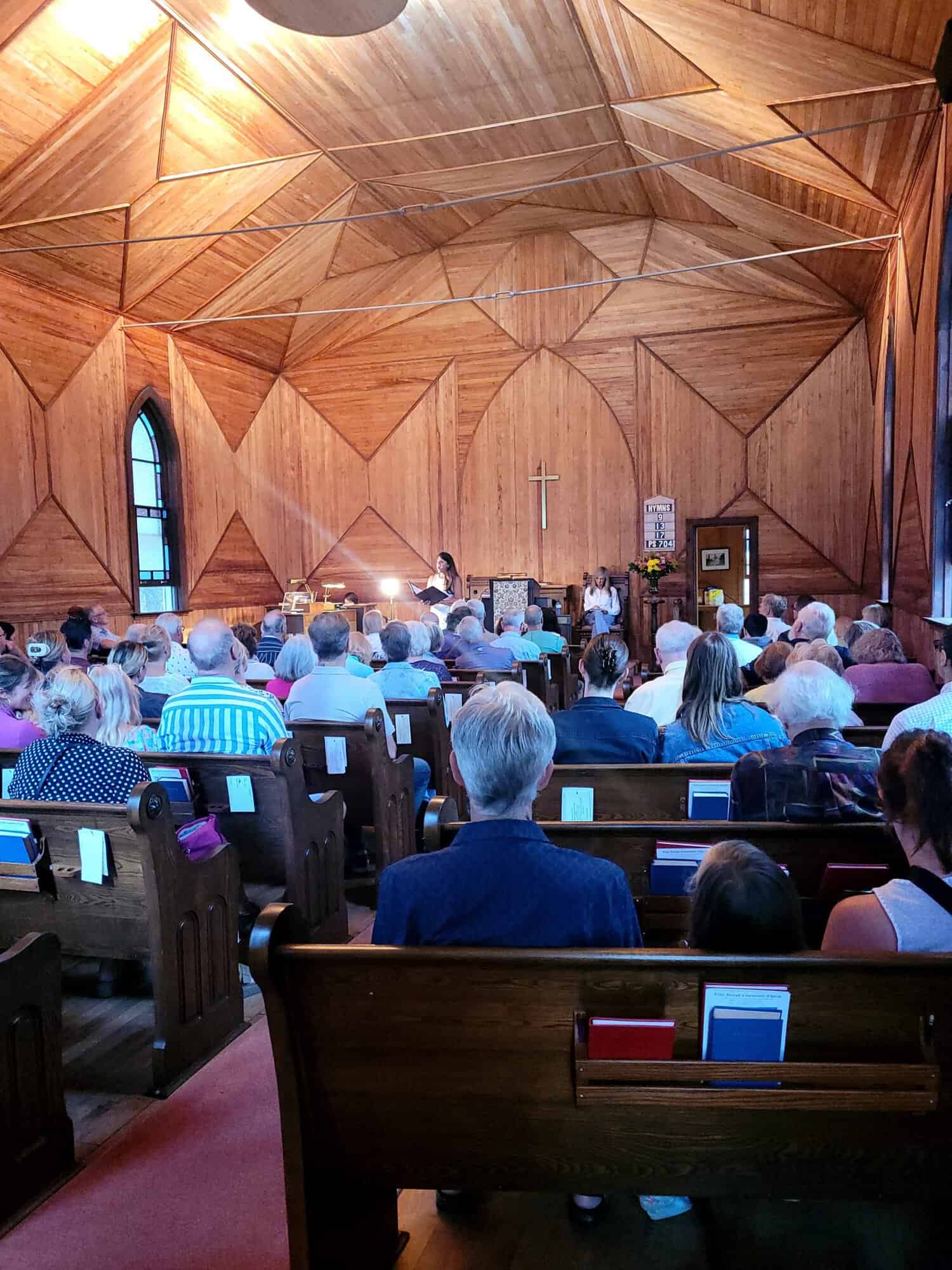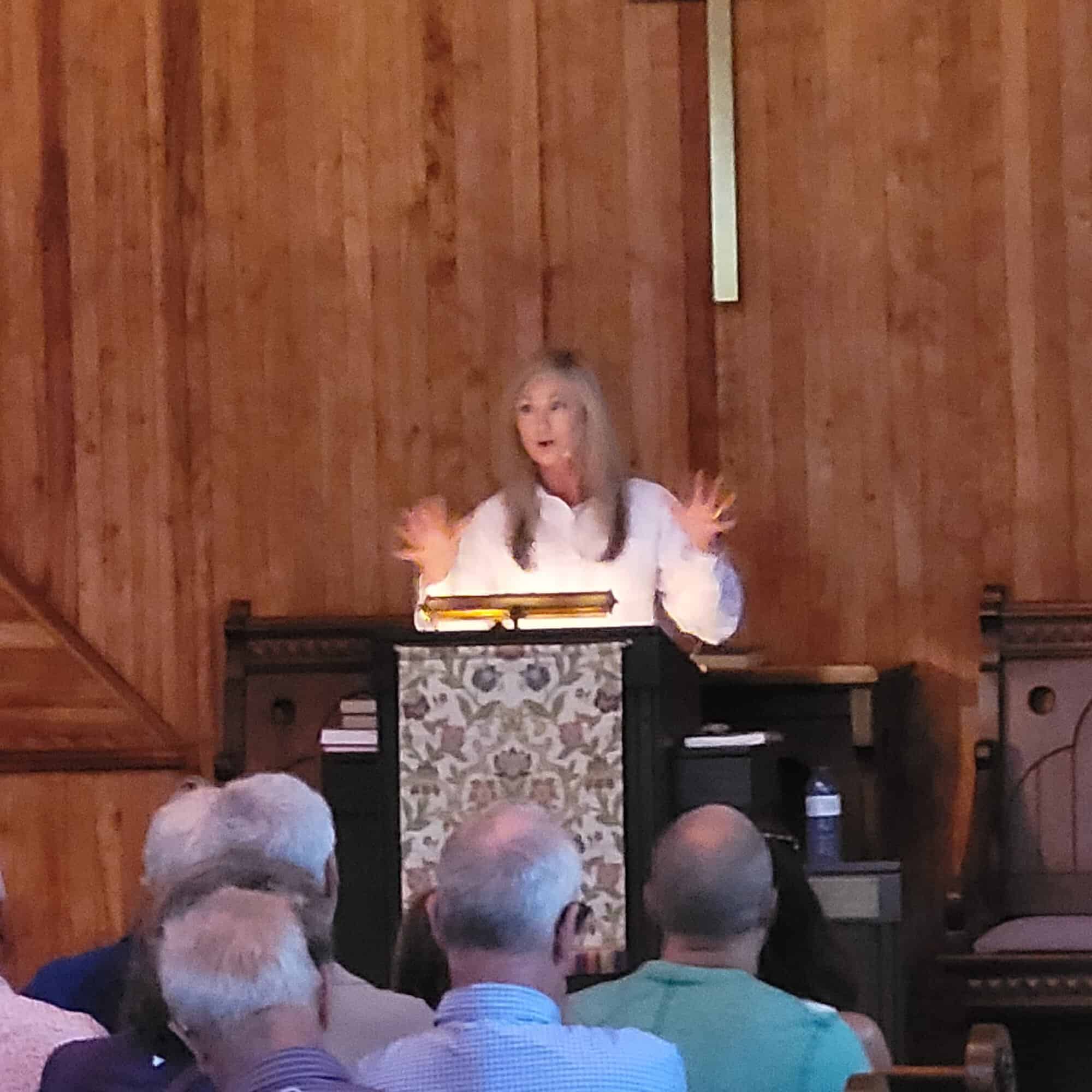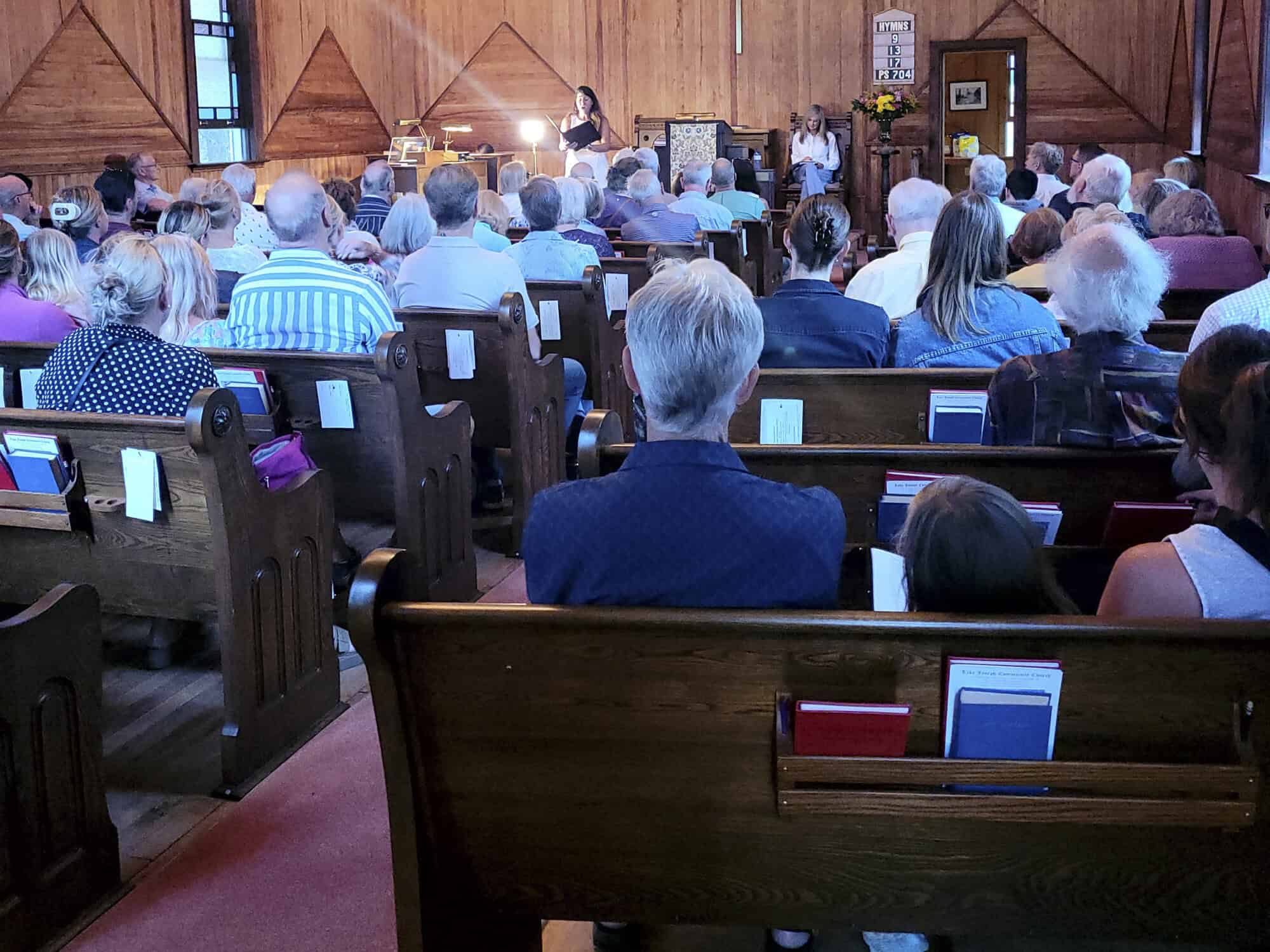
This sermon by Rev. Robyn Elliott, argues that the central message of Jesus is not about violent, conquering Messiah but about the surprising plot twist of Jesus as the slain Lam whose self-sacrificial love redefines true power. John, the narrator of Revelation—and all who expected a lion-like warrior to overthrow Rome—are shocked to see a slaughtered yet living Lamb instead. This reversal echoes Jesus’ life and teachings, where victory comes through humility, forgiveness, and the cross rather than force or domination. The sermon contends that the cross is not merely the means of salvation but the very way God reigns, challenging Jesus followers to reject the world’s pursuit of power, nationalism violence, and status in favour of the Lamb’s way of sacrificial love.Ultimately, it calls believers to let this vision reshape their understanding of leadership, success, and discipleship, embracing vulnerability and love as the true power that transforms the
world.
Have you ever been out with friends and ordered a bunch of drinks, the server brings the tray, distributes the drinks, and you take a big chug of your anticipated Pepsi only to find that it’s Root Beer?! Or you’ve sipped a cup of tea and it was coffee? What happened? Did you involuntarily spew it? Or almost spew it? It’s a bit of a mind bender isn’t it? It messes with our heads. Even if we like the drink in front of us, in that moment, our brain is expecting one thing and our taste buds give us another.
This is the scenario in the text we read today, in fact, throughout the whole book of Revelation. I’d go further and say, throughout the gospels. Everyone expected one kind of Messiah – a wrathful warrior on a white horse, coming to eradicate their enemies, but they got another — a crucified peasant on foot, preaching love of enemies.
When we read about Jesus without our tamed and domesticated translations and interpretations, in his historical, political, and religious, first century context, we see a Jesus who is altogether radical, blowing apart our categories, and continually swapping out our Pepsi. We see this in the gospels, the Beatitudes (the last shall be first), and the cross (“Father forgive them, for they don’t know what they’re doing”), and the whole book of Revelation. Revelation is not a cryptogram to be decoded or a crystal ball to foretell the end of the world, but the revelation of Jesus Christ, as the first five words of Revelation tell us. As such, the Jesus of Revelation should look like Jesus of the cross – an enemy-loving, crucified peasant. If he doesn’t, we have problem. Which is why so many avoid Revelation altogether. They don’t like the Jesus they find there.
In the passage we read today, the author John, is given a vision. He’s in the throne-room of the cosmos – Universe HQ – and in the centre is a magnificent being that he can’t describe in any other way except with precious stones and light. Surrounding this throne are mythical-like creatures and elders representing the Jewish people, and the apostles of the Jesus movement. This cosmic ruler is holding a mysterious scroll that’s sealed symbolizing God’s plan for the restoration of all creation. But no one is worthy to open to it! Restoration will never be realized! The world is stuck in a hamster wheel of violence and death, going round and round with no end. John is undone! He weeps and sobs bitterly. Then one of the elders sees something and says:
“Stop weeping! Look, the lion of the tribe of Judah, the Root of David, has conquered; thus he can open the scroll and its seven seals.” (Rev. 5:5 NET)
Yes!!! A lion – a saviour! The lion was the quintessential symbol of strength. And not just any lion but from the tribe or family of Judah – the bloodline of the iconic King David. The king who expanded Israel’s borders, conquered their enemies, and made them into a nation to be feared and revered. This lion-figure is highly symbolic of the promised Saviour and would be ruthless. He would kick Rome out of the land releasing them from centuries of oppression by a colonizing empire. What John expected, what all Jewish people expected, and what they wanted (and this is key), what they pinned all their hopes on, was a militant messiah – a Caesar-like saviour. Isn’t that how you win? Isn’t that how we expect to win? Through power and might?
The text continues: “Then I saw standing in the middle of the throne and of the four living creatures, and in the middle of the elders, a lamb that appeared to have been slaughtered.” (Rev. 5:6 NET) Look, a lion! Then I saw a lamb.
A lamb, not a lion. That’s not what John was expecting. (Someone had swapped out his Pepsi!) Imagine his acute disappointment. He expected, he wanted, a Caesar-styled mighty warrior, a lion-like conqueror, the one promised centuries earlier, but instead he sees a lamb covered in blood.
This was not just your typical lamb, but a tiny lambkin (Greek arnion), that had been slaughtered and was now standing – was dead and is now alive. Clearly this is a symbol of the crucified and risen Jesus. Well that’s nice. We love Jesus. Jesus is central to our faith. We’re grateful for his demonstration of love but, that’s not what’s needed in this moment! Is it? Gentle Jesus meek and mild will not solve the problem of Rome. He can’t possibly fix the world, can he? Move over gentle Jesus, we need a ferocious lion! Isn’t that what we do?
We keep Jesus neatly over here: in my personal salvation box, in my “get to heaven” box, in my forgiveness box, in my “thanks for loving and restoring me” box. But stay out of my grudge box, or my finances box, or my “how I vote, save, spend” box, or my love of power box.
This must have felt like a set-up! John has been set up: look, a lion – all will be well now –only to be let down: what? A lamb? This set-up creates a dramatic contrast. We see this throughout Revelation and Jesus’ life. What John sees interprets what John hears, and what he hears is almost always the traditional concept of God, or image of the Messiah, and it always has a violent undertone.
It’s not that the Hebrew scriptures (the Old Testament) were wrong, they were just incomplete. God came in the flesh, as Jesus, and fully revealed the nature of God, and we’re still trying to get our heads around that, aren’t we? In my observation, the church is mostly failing at it.
Look, the lion! And then I saw a lamb. Look, a wrathful warrior on a white horse, then I saw a crucified peasant. Look, the embodiment of power, then I saw the embodiment of powerlessness. Even for John — exiled for his faith on an island off Greece (hmmm … not a bad exile situation), he’s locked in his Jewish expectations and is so shocked by what he sees. He knows the story of Jesus; he may have been a disciple of Jesus; he was punished for his faith in the resurrected Jesus, and yet he was scandalized that power comes clothed in powerlessness.
Throughout Revelation John continued to be scandalized. He will continue to hear one thing and see another. He will constantly have his expectations blown apart. If for John, how much more for us?
Seeing Jesus should do that for us. It should demolish all our categories, destroy our incomplete images of God, and upend our expectations of power. The vision of the slaughtered lamb is a complete deconstruction and reconstruction of our understanding of how God operates. It demands that we ask: what is true power?
Revelation was written to seven specific churches (but the number seven is symbolic of completion so this is a timeless letter, written for the universal church, for us). Some of these churches were enduring physical persecution – that was a definite threat – but what concerned John most was the political seduction of empire. The allure that power had for Jesus followers – their striving for access to the levers of power.
Our reality today is that power isn’t just found in empires and military superpowers. It’s crouching in really good organizations, in families, and in churches, vying for our allegiance. Wherever people strive for power we find distorted power.
The bottom line of John’s vision, Friends, is that the power of God is found in a slaughtered lamb. The text says this lamb “… had seven horns and seven eyes, which are the seven spirits of God sent out into all the earth.” (Rev. 5:6b) Horns were a symbol of power; seven was a symbol of complete power. So this vulnerable lamb has lion-like power but not lion-like character.
Theologian Richard Bauckham wrote, “When the slaughtered lamb is seen ‘in the midst’ of the divine throne in heaven, the meaning is that Christ’s sacrificial death belongs to the way God rules the world.”
Jesus’ crucifixion was his coronation. Christ crucified is Christ glorified. Jesus said it himself when speaking about his crucifixion. He told his disciples, “the hour has come for the Son of Man to be …” crucified? No! “glorified.” (Rev 12:23) Later, the apostle Paul said, “for the message about the cross … is the power of God.” (1 Cor. 1:18)
This blows apart our concepts and constructs of power! When James and John asked Jesus, “let one of us sit at your right and the other at your left in your glory.”
Jesus said: “you don’t know what you are asking.” In other words, ‘you have no clue!’ Stuck in their worldly context, they pictured an imperial throne, like in John’s vision, and each of them on either side, ruling beside Jesus. But Jesus’ throne is a cross. The cross was not defeat, but victory – a concept we struggle to embrace. (We know who were on either side of Jesus when he was glorified. Two criminals!)
I think pastor Brian Zahnd put it best when he said, “Jesus not only saves the world through the cross, but he rules the world from the cross” (italics mine).
The cross isn’t just an atonement theory. In other words, the cross isn’t just a way God forgives us, or so God can love us, or a way to heaven when we die. The cross is the way God rules. The way God wins. This is so counter-intuitive and counter-cultural. One notorious celebrity pastor said this: “In Revelation, Jesus is a pride-fighter with a tattoo down his leg, a sword in his hand and the commitment to make someone bleed. That is the guy I can worship. I cannot worship the hippie, diaper wearing, halo Christ because I cannot worship a guy I can beat up.” (Mark Driscoll). This sounds crass to most of us, and it is. Yet, the church throughout history and particularly in the west, often acts like this Jesus: conquer or be conquered, kill or be killed. The church in the west is drunk on celebrity, size and status, unmoored from the cross, enamored with power, and in desperate need of recalibration.
I think we want a lion and a lamb. A lamb who saves us and a lion who conquers for us. But there is no lion. Jesus is not a lion and a lamb. He is not a slaughtering lion, but a slaughtered lamb who sits on a cross-like throne and rules from a cross-like throne. His throne is the cross and the cross is his throne. It’s how God rules. It’s how God wins. Therefore, his followers cannot be otherwise. We can’t worship Jesus and Caesar. Jesus and money. Jesus and power. Jesus and state. Jesus and military. God’s way doesn’t come by might, or guilt, or fear, or legislation. Not by autocracies, theocracies, or democracies. That’s not the way of the lamb. The Jesus way leaves no room for religious nationalism. Church and state are incompatible. The Kingdom of God – the way of peace and flourishing for all – will replace the kingdom of Rome and all military superpowers, colonizers, oppressors, and death itself. That’s God’s promise to us. But only through the vulnerability of the lamb .
There is no room for a lion in the Kingdom of God, in the Church, among Jesus followers. When we picture God as powerful on a throne we must picture God as a slaughtered lamb. If we don’t, we have the wrong God. We have a pagan god, not unlike Zeus, Thor, or Marduk, and we will model our behaviour, our own handling of power, our treatment of others, based on the image of who’s on the throne; based on our image of God. We see this played out in history and our current cultural moment. Again, Brian Zahnd so aptly asserts that, “Whatever justifies violence as a means to an end is never the kingdom of God.”
Self-sacrificial love — the way of the lamb — is what will transform the world. Do you want to change the world? Then don’t power up, power down. Do you want to change the world? Then slaughter the image of a lion and follow the slaughtered lamb. I wonder, as I ponder the power of the slain lamb, how that challenges our concepts of: success, strength, and leadership? If the cross is how God rules and how God wins, what impact does that have in our daily lives? When you wake up Monday morning, what impact will the slaughtered lamb on the throne of the cross impact how you manage, govern, and lead in business, church, and organizations? Do we render the cross powerless and Jesus obsolete? Are we in serious need of a swap: Look, a lion! Then I saw a lamb.
Benediction
Now may the God of hope fill you with all joy and peace as you trust in Him, so that you may overflow with hope by the power of the Holy Spirit. Romans 15:13 NIV