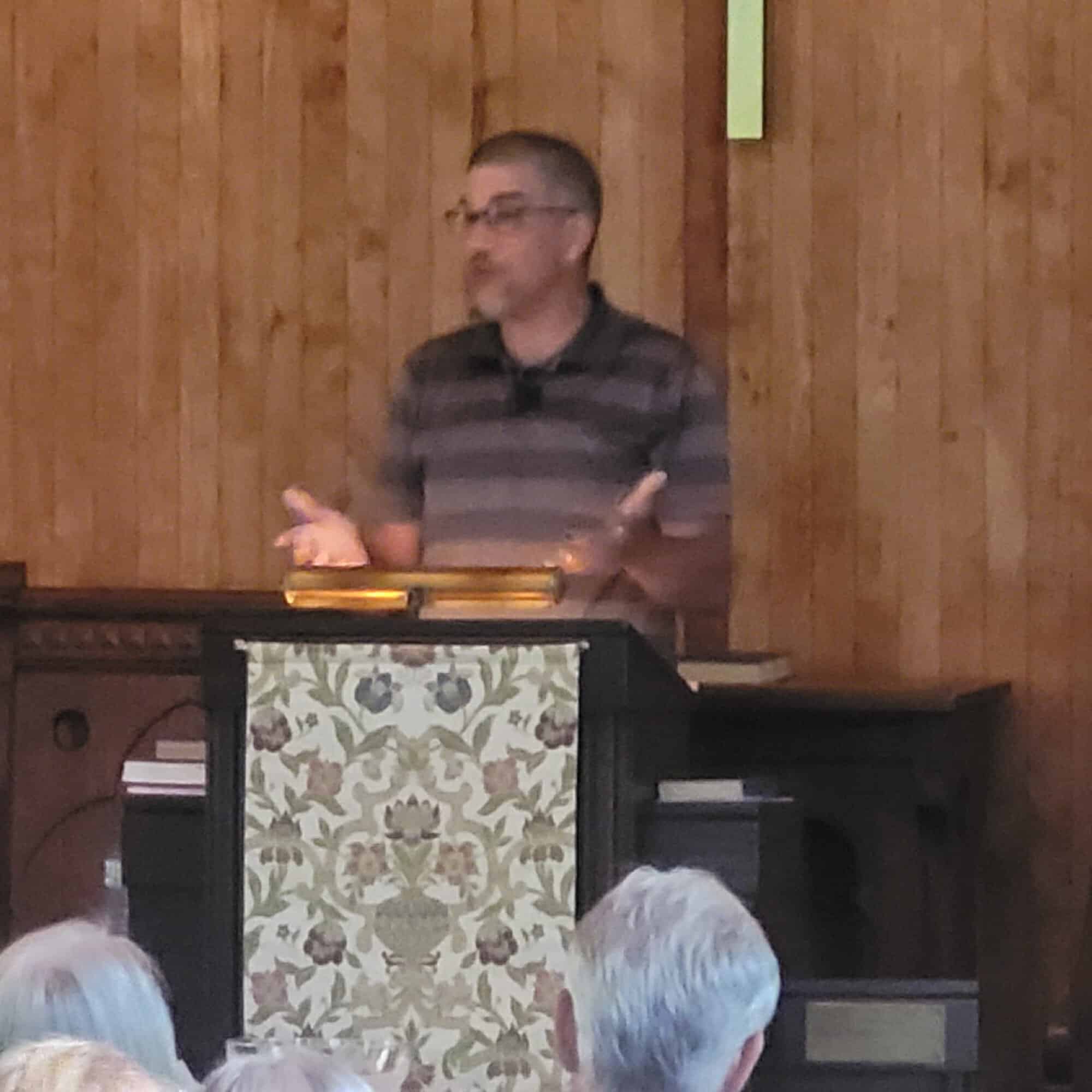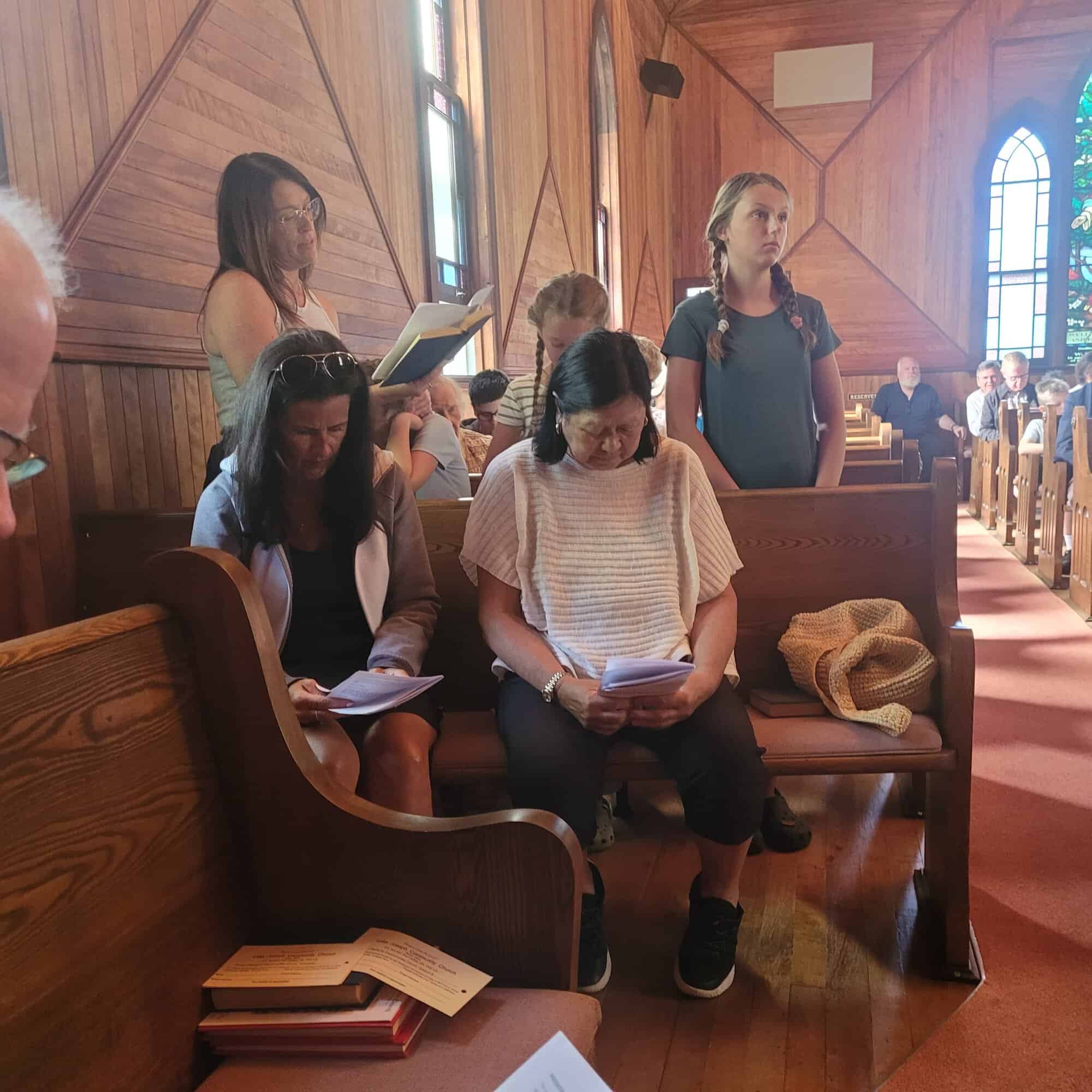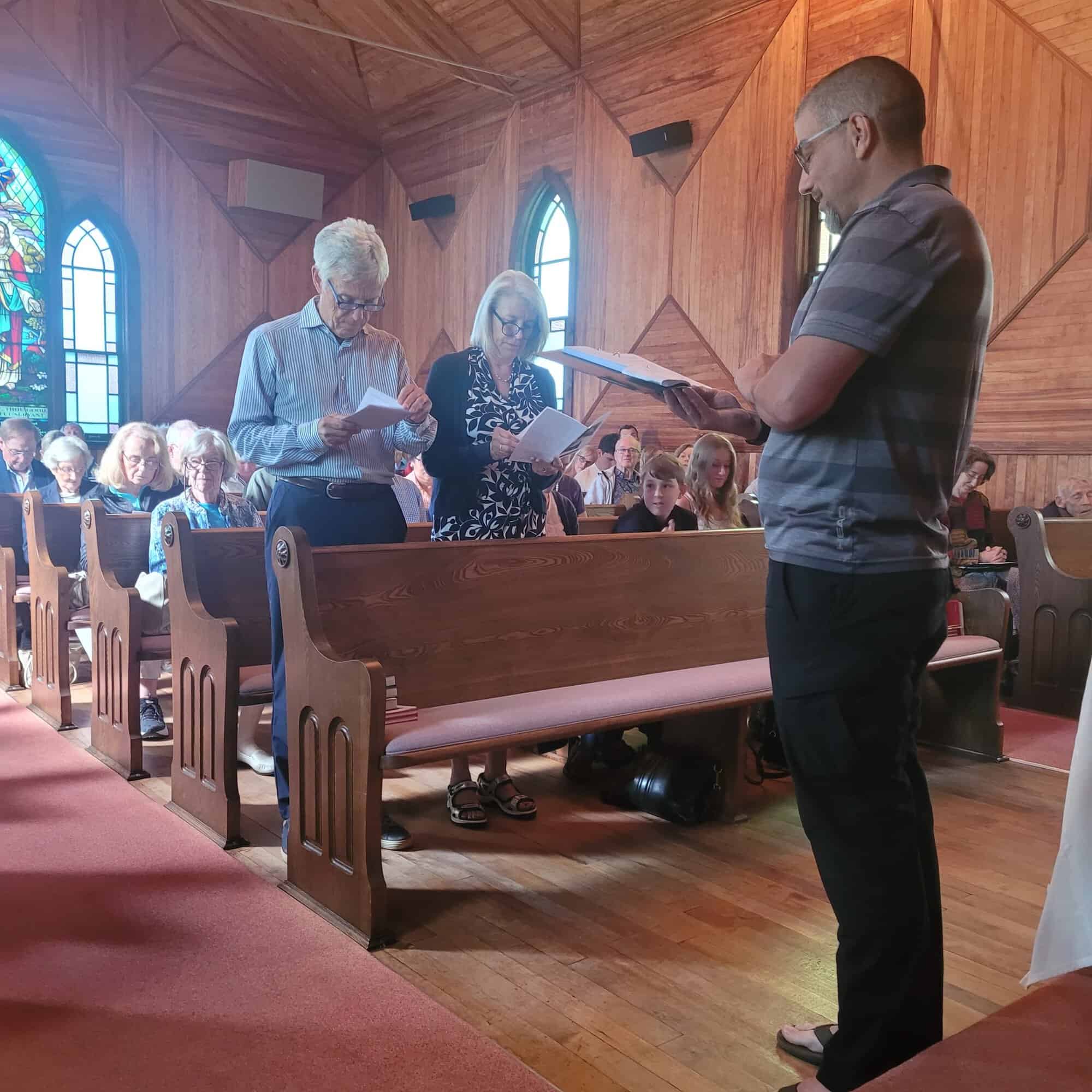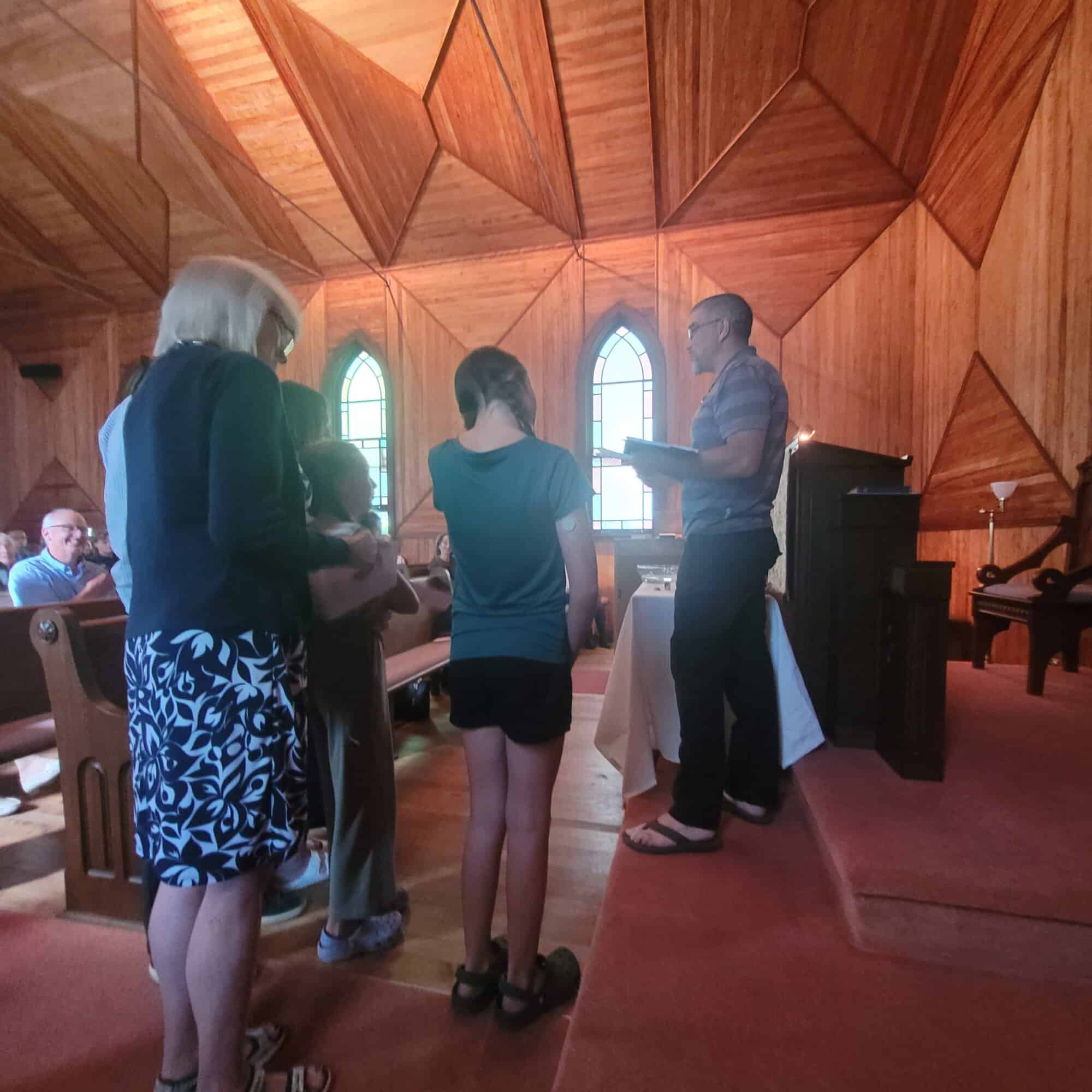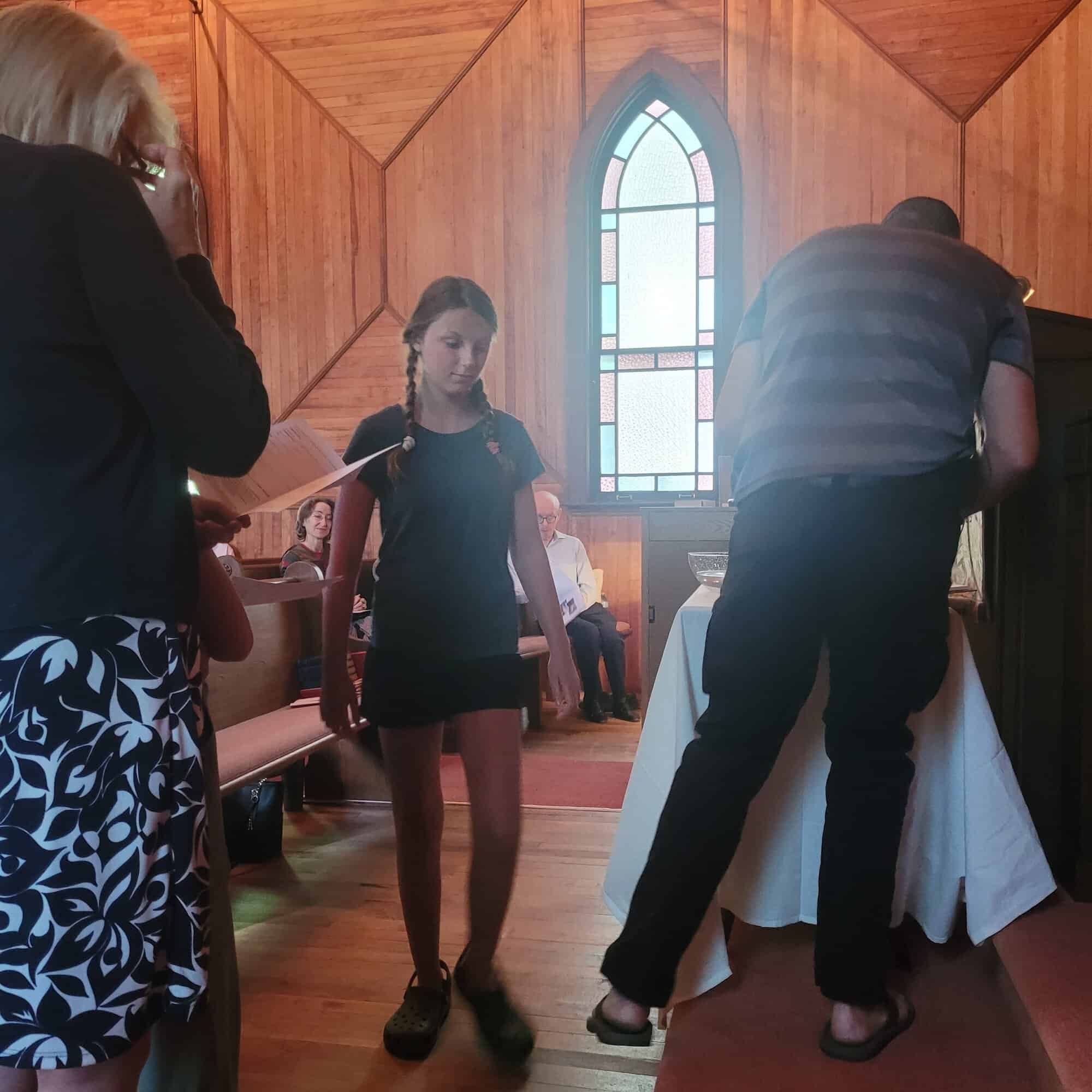
Rev Tim Haughton’s sermon presents baptism as an entry into God’s “song of new creation.” Beginning with Genesis 1, it argues that humanity was created by the loving community of Father, Son, and Holy Spirit, and was made to know and enjoy God’s love and delight. The repeated declaration that creation is “good” culminates in God’s delight in human beings.
Sin disrupts this song by causing people to doubt God’s love and seek worth through other people, work, or achievement. Haughton contrasts striving to prove one’s value with living from the assurance of being loved by God.
Jesus’ baptism, death, and gift of the Holy Spirit restore this relationship. In baptism, believers die and rise with Christ, receive God’s grace, and begin to be remade in Christ’s likeness. The sermon concludes that baptism affirms believers’ identity: in Christ, they are loved by the Father, welcomed into the life of the Trinity, and renewed for God’s glory and the flourishing of the world.
I can well imagine in a room like this there will be varied perspectives on baptism – in the Anglican tradition I inhabit we will call it a sacrament – which is just a fancy word for an outward sign of an inward reality – in the waters of baptism we die with Christ and are raised to new life in Him – in some traditions it is an act of obedient response – believe and be baptized – in other traditions – it’s an act of covenant – as babies are baptized to express that God’s grace extends to the children of those who are in Christ – affirming that his grace proceeds our human response.
But regardless of our varied denominational convictions around the how and when of baptism – there is often deep biblical alignment as to what it means.
There are many different biblical texts we could lean into at a time like this – that allow us to see the depth and beauty of baptism – that not only will undergird Charlotte Elizabeth and Madeleine in what they are entering into today – but also invite those of us who are baptized – or who are yet to make such a step – to become rooted in its reality and power – for one way we could articulate it – is that baptism is entering into the song of new creation – baptism is entering into the song of new creation.
That conviction brings us to the opening verses of the bible – “In the beginning God created the heavens and the earth” – which seems an odd place to go right – because those words often trigger us to ask – how? How did God create? How does this fit in with our scientific theories of evolution – of the Big bang?
But…Genesis 1 never seeks to answer the question How? But rather the question why? Why were we created? Why do we exist? Which if we think about it is a far a more interesting and practical question– for an answer to that will impact every aspect of life.
Genesis one isn’t so much a piece of history as it is a poem – a song – a song with repeated lyrics – it was evening, it was morning – the first day – It was good – And God said – there are 7 days – there are 7 Hebrew words in the first sentence, 14 in the second. It’s a song – a song that tells us why – why we were made.
For many years – at every baptism we had at the church I serve – Little T – we gave each child – each family – the “Jesus Story book Bible” – when our boys were young Laurie and I really enjoyed reading it to them – as it is a children’s bible packed with deep insight for all ages.
As this bible turns to creation – in a chapter entitled – the story and the song – Sally Lloyd Jones – the author – begins with these words – God wrote, “I love you” – he wrote it in the sky, and on the earth, and under the sea. He wrote his message everywhere! Because God created everything in his world to reflect him like a mirror – to show us what he’s like, to help us know him, to make our hearts sing.
Sally rightly picks up from Genesis 1 that we were made to sing creations song – and Genesis 1 gives us the song we’re made to sing.
There are two refrains in the song that I want to bring to the surface – God said – It is good – God said – and it is good…
8 times in this first chapter of the bible we hear that God said – and it was so – and then God names what he’s created. But then in vs. 26 – when God turns to create us – humanity – strikingly and significantly the pronoun changes…God says “Let US make humankind in OUR image”.
What are we to make of that? Well Christians have long articulated that God exists as a trinity – a community – of Father Son and Spirit – and we see this reality expressed even in the first few verses of the bible. In the beginning God – in Hebrew –Elohim created the heavens and the earth – Elohim is a plural name for God.
Vs. 2 – And the Spirit of God was hovering – and the word pictures a mother bird hovering over the nest of her young – the Spirit of God hovered over the water and God said “let there be light” – by his word Elohim creates. Now if we were to fast forward in the bible to the gospel of John – it begins with these words – In the beginning was the word – and the word was with God and the Word was God – and by the end of John’s first chapter– he says – this word that was in the beginning with God – is Jesus – the Son.
And so right here in the 1st few verses of Genesis we are shown this picture of God – a God of community – of relationship – of trinity – Father, Son and Spirit, all working together to create us.Meaning that you and I were created in the image of a community – of a relationship – what kind of relationship? Well, In that same telling of the story of Jesus from John – John will say that Jesus was at the bosom of his Father – that love was primary between them – In another verse from the book of Proverbs – chapter 8 – we have one of the persons of the community of God speaking about the work of creation in this way – I was beside him, like a master workman, and I was daily his delight, rejoicing before him always.
And so we see in this first chapter of the bible this amazing picture of God – of Elohim – a God of relationship – of community – Father, Son, and Spirit loving one another, praising, enjoying, delighting in one another.
What does that tell us? It tells us that love is at the center of the universe – as Darrell Johnson puts it – a loving relationship between a father and a son. A relationship so pulsating with life that the relationship itself is breathing – living – a spirit – a person – the HS – out of that relationship we were made – For that relationship we were made.Meaning you and I were made to know, to delight in, to enjoy the love of God.
Kate shared with me last week that one of the ways she has been discipling her daughters is by way of the westminister shorter catechism – it opens with the question – what is the chief end of humankind – in other words – what is our purpose – the answer is given – to glorify God and enjoy in forever – by that phrase we are being invited to enter into the very life of the trinity. But thats not all – this song of creation has a second refrain – “it is good” – It is good.
Now this is not the good of a job done to meet specifications. Like quality control at a factory’. This is the “it is good” of God delighting, taking pleasure in his creation.
Pushing back from the table after a favorite meal…it is good. It is for the children in our midst running through the sprinkler on the first day of summer holidays – it is good.
The first splash of fine wine across the palate…it is good. Hearing music performed with exquisite skill and emotion…it is good.
On every day of creation – God speaks his delight – it is good – it is good – and then on the sixth day – God fashioned us from the dust of the earth – and speaks his delight over us – it is very good…
Why were we created? We were created to sing the song of creation – my creator loves and delights in me (x2). When we behold the beauty of creation we catch a hint of that song of praise…
A sunset on the west coast as storm clouds are brewing says…my creator loves and delights in me. A waterfall bubbling over moss covered rocks, in a vista of shades of green says…my creator loves and delights in me. The canvas of the sky on a dark, clear night echoes the majesty of God…my creator loves and delights in me.
In C.S. Lewis’ first book in the Narnia series – the Magicians Nephew – Diggory and Polly are transported into the land of Narnia at its creation. They are there to witness its making. The lion Aslan opens his mouth and sings as a world is made around them. And as the world is being created it begins to sing along with Aslan.
We began in a song, our purpose is to sing that song – my creator loves and delights in me. But something as we know – goes terribly wrong – the song becomes broken – in chapter 3 of Genesis humanity begins to mistrust the goodness of God – mistrust whether God loves them – mistrust that God delights in them – and it leads to the brokenness of relationship with God, one another and with creation – which is at the heart of every aspect of human brokenness we encounter in our world –
But we still yearn to know that we are loved and delighted in – it’s a song – as C.S. Lewis says that we still long to sing – and so we turn to the people around us to hear that song sung – do you love me delight in me – we’ll crush them with expectations – be devasted when rejected – we’ll project an image of ourselves that we think the other person will love – and then we wonder if they would love us if we showed them who we really were.
Not only people – we’ll turn to our work – to get a sense of acceptance – or worth. This is why work is so exhausting – its not so much the work that’s tiring – its this work under the work – work for love and acceptance.
Am I liked here? Am I appreciated? Do my boss and coworkers approve of what I do? What are people going think of me in this?
One of my father’s favorite films is Chariots of fire. In the film there are two runners with two very different views of their work. When Harold Abrahams runs he says he has 10sec to justify his existence. When Eric Liddell runs he says God made me fast and when I run I feel his pleasure. One man is running to prove who he is – the other runs because he knows who he is. One man runs to try and prove that he is loved and delighted in – the other runs because he knows he’s loved and delighted in.
We were made to sing the song of creation – my creator loves and delights in me – our sin – our rejection of God’s love – our turning to other things has left us out of step with that song – unable to sing it – our only hope is to hear the song reborn – to join again – in a song of new creation.
For there is another time in scripture where that song is sung – At the baptism of Jesus – Jesus the word – the Son of God is in the Jordan river – and the spirit of God as a dove hovers over the water – and God the Father’s voice speaks over him – this is my beloved son in whom I’m well pleased – I love and delight in you – a picture that echoes Genesis one – telling us that God is about new creation in Jesus.
On the cross, Jesus as God’s Son essentially says this to you – I love you, and here I’m showing you how much I love you. And what am I asking of you? – give me your sin, your brokenness, the things you look to to sing that song for you – and in return I will give you my goodness, my righteousness, my position – my relationship with the father. Not only that I will give you my Spirit – my very presence to dwell within you, making you bit by bit into new creation – reflecting my very likeness. This is what baptism celebrates – entering into the song of new creation.
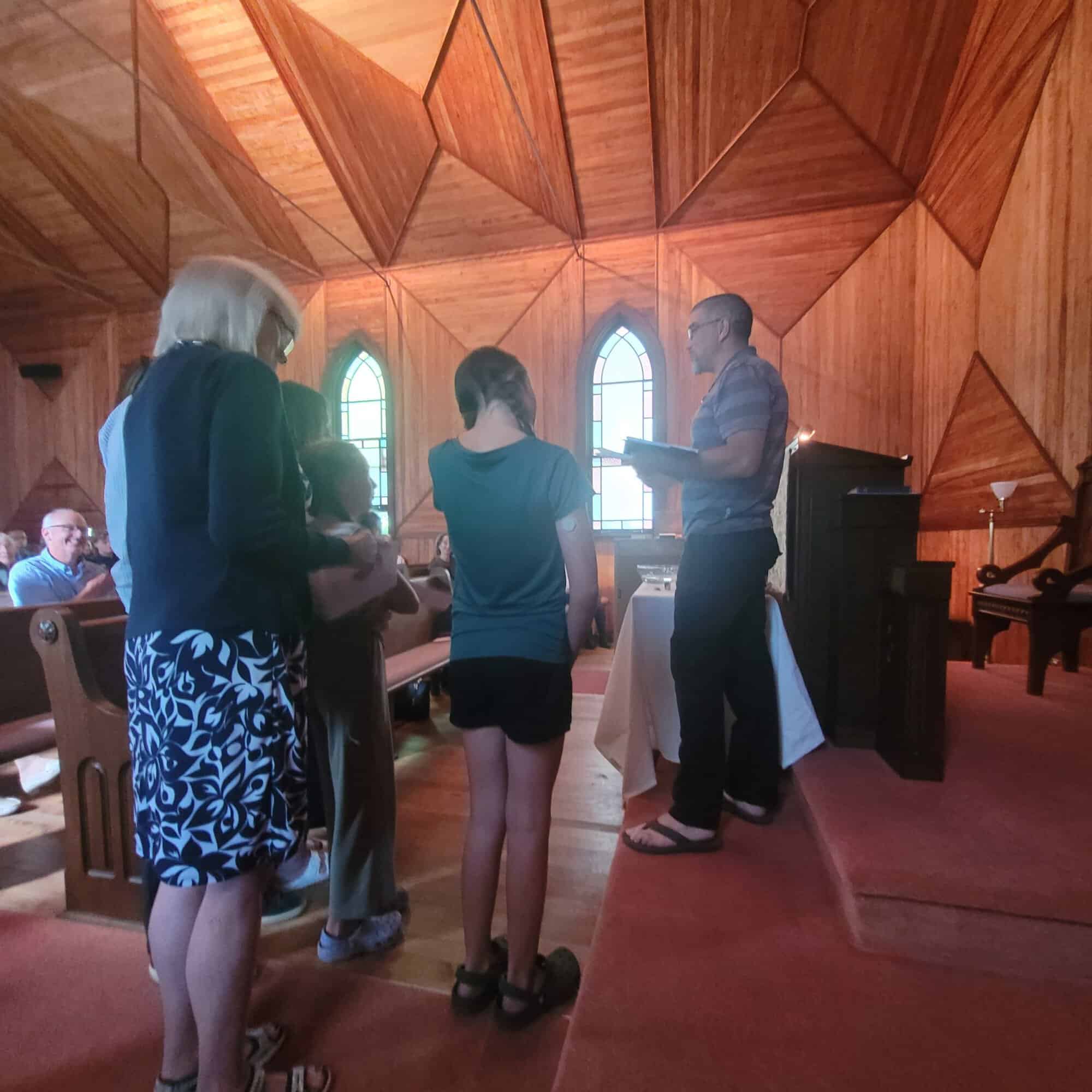
Today in Baptism Charlotte, Elizabeth, and Madeleine are entering into that song – in Christ revelling in the Father’s delight – being welcomed into the life of the Trinity – receiving the gift of the Holy Spirit. And as we witness their baptism, we remember that this is our song too:
In Christ, the Father’s delight is spoken over me – In Christ I’m drawn into the love of the Trinity – In Christ By the Spirit, I’m being made new – for the glory of God and the flourishing of his world.
Amen!